

A tailored workspace reflects who you are and supports how you lead.
A well-designed office goes beyond aesthetics. It becomes a backdrop for leadership, supporting focus, confidence, and composure while reflecting the strength and individuality behind the work. For many of our clients, especially those in highly structured professions, the office is where decisions are made, conversations unfold, and presence matters. It’s also often the space where they spend the most time, making it essential that the design supports not only performance, but comfort, well-being, and a sense of personal connection to the space.
As interior designers, our thinking on office design has evolved. The personal office as more than a workspace, it’s a high performance environment. As work becomes increasingly digital and often visible through a screen, the physical space plays a different role. It supports focus, shapes how you show up on camera, and provides a necessary counterbalance to hours spent in front of technology. Thoughtful design considers not just aesthetics, but energy, how the space allows you to concentrate, reset, and move through your day with clarity. The most successful offices are layered in a way that feels quiet but intentional, where every element works together to support both productivity and presence over time.
Start with Positioning
Where you sit shapes how you feel in the space, but how you enter it matters just as much. We think carefully about the experience of arrival: what you see first when you walk in, how the desk aligns within the room, and how the space transitions you from home into a more focused mindset.
We prioritize placing the desk in a “power position”, facing the door or with a clear side view so there’s a sense of awareness and control. This positioning not only supports how you work, but also creates a natural focal point upon entry, reinforcing a sense of structure and intention.
That initial sightline sets the tone. Whether it’s a view to the outdoors, a piece of art, or the desk itself, the goal is to create a moment that feels composed and grounding. It’s a subtle shift, but one that allows you to feel prepared and present the moment you step into the room whether you’re starting your day or welcoming someone in.
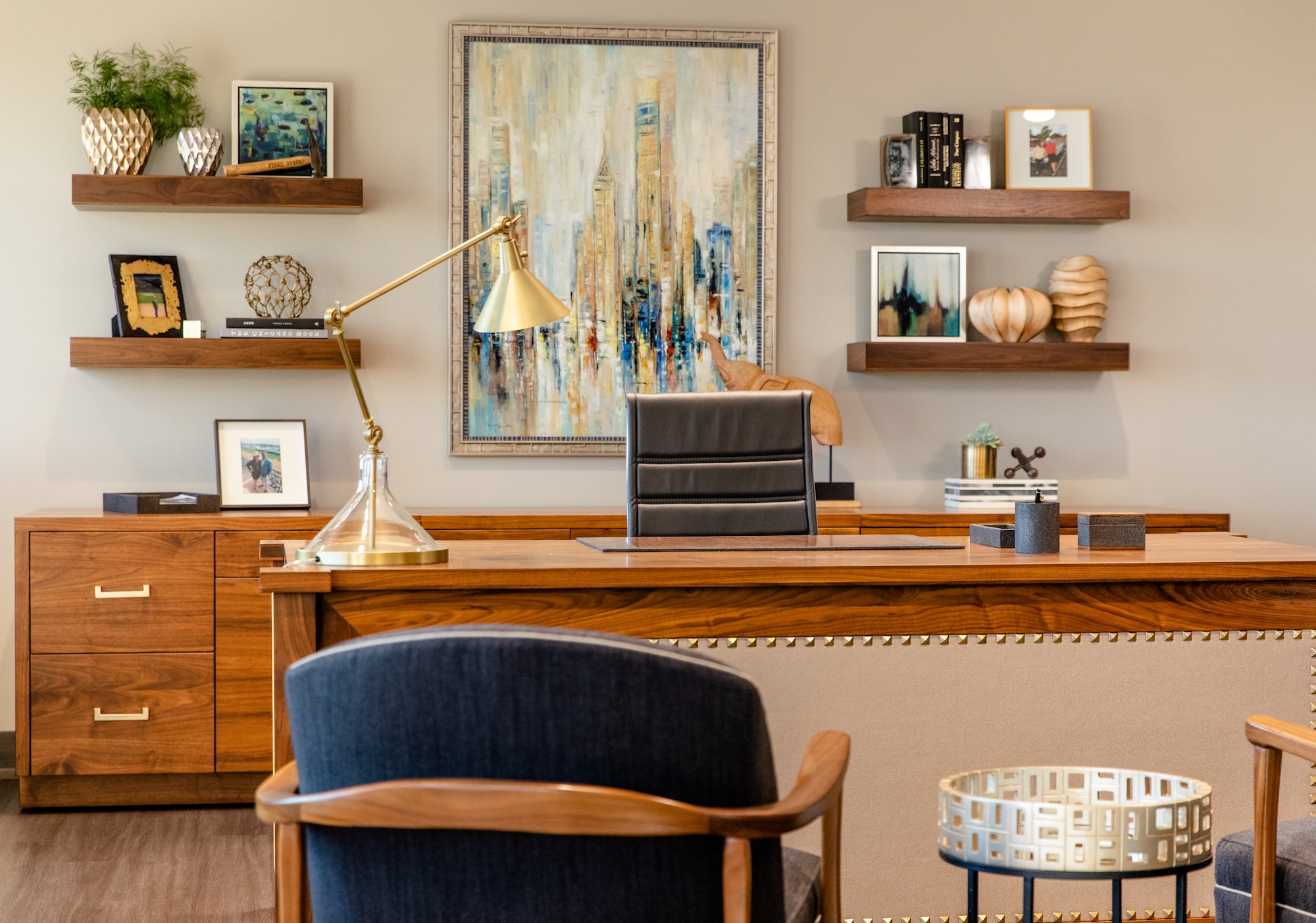
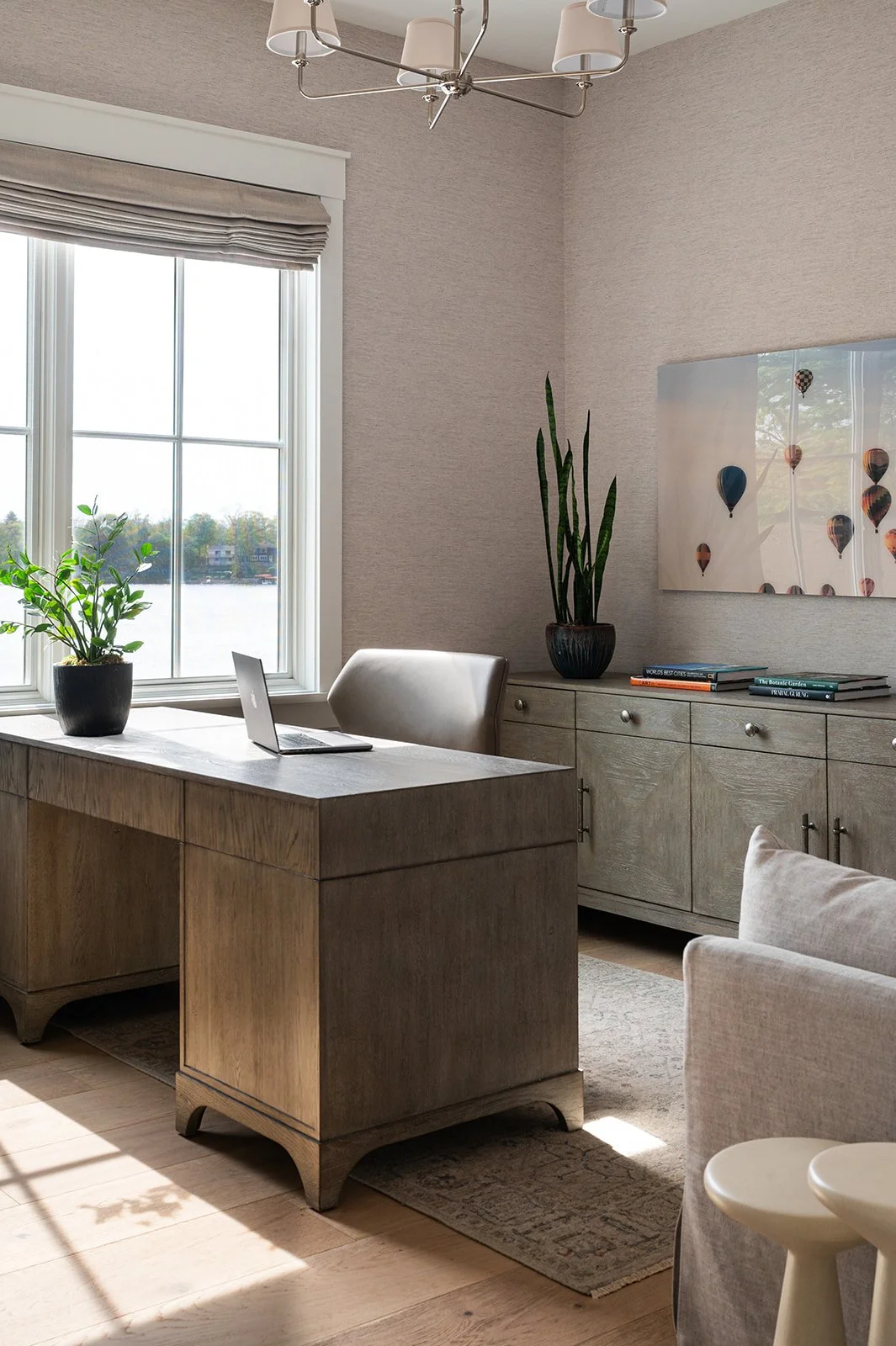
Natural materials and thoughtful details bring balance to this office. We brought in warm wood millwork, sculptural lighting, and layered accessories to soften the structure of the space. The result is an environment that elevates the atmosphere of the space.
Design for Comfort That Lasts
An office chair should support you first and foremost. We always begin with ergonomics, then layer in materials and tones that align with the overall palette. Comfort isn’t an afterthought, it’s foundational to how the space performs over time. A pretty chair is rarely the most comfortable. Take time to try out different options before you make a final decision.
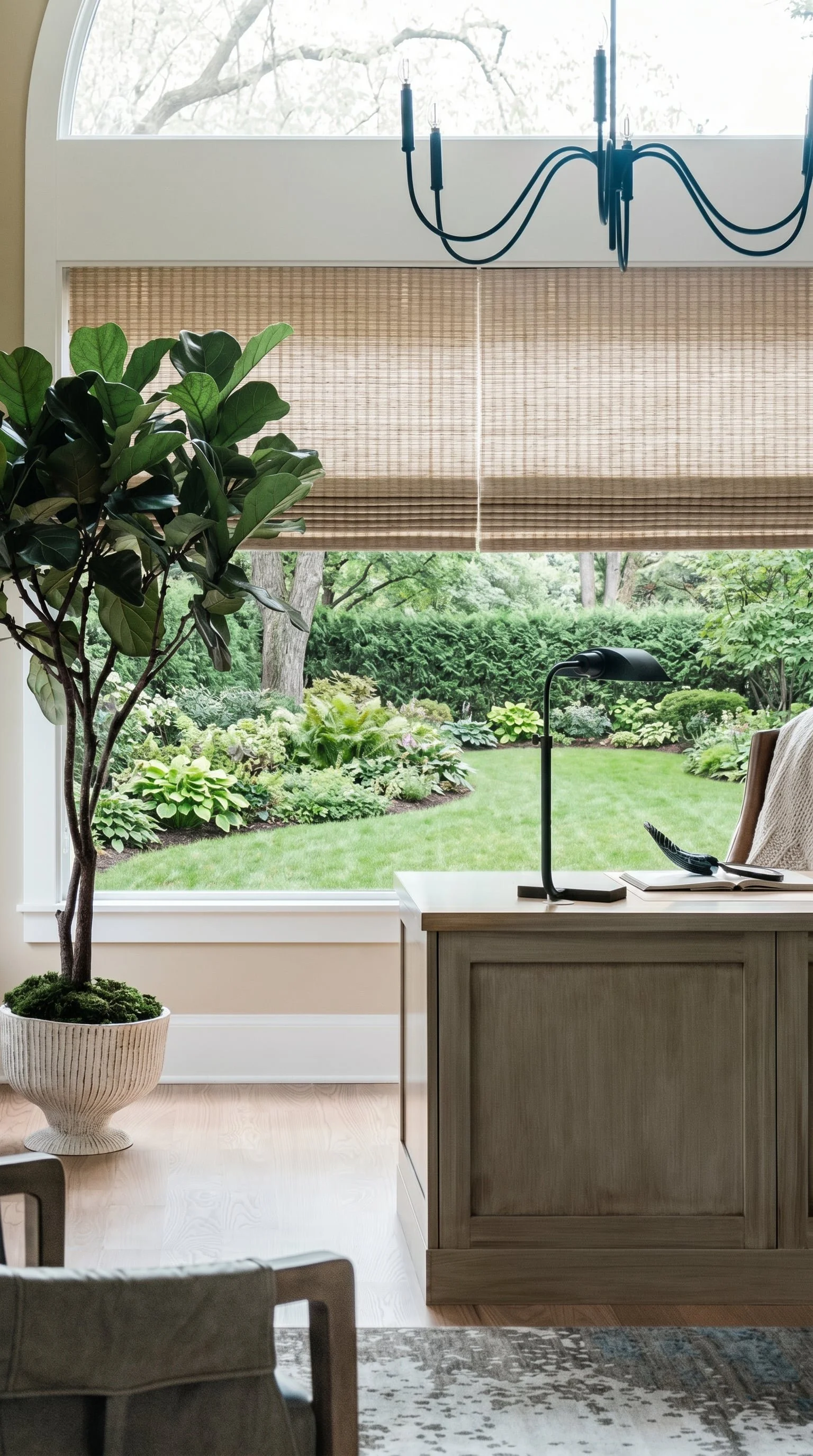
This office is designed in layers, where a rug anchors the space with warmth and texture, woven shades soften the natural light, and task lighting adds clarity without harshness. Together, these elements create a workspace that feels composed, comfortable, and thoughtfully resolved.
Balance Structure with Natural Elements
In a space that often needs to feel focused and composed, natural elements provide an important counterbalance. Plants introduce movement and softness, but we also look beyond greenery, incorporating warm wood tones, honed stone, and finished with texture. These materials soften sharper lines and bring depth to the room, creating a sense of comfort in the space. In more utiliatarian spaces, these elements can have a big impact.
Ground the Room Underfoot
A rug does more than add warmth, it refines how the entire office comes together. In spaces that may begin with more corporate foundations, like wall-to-wall carpet or harder surfaces, a rug introduces depth, softness, and a more residential sensibility. It helps define the workspace, anchor furniture, and create a sense of cohesion without adding visual weight. Beyond aesthetics, it also improves acoustics, absorbs sound for calls and meetings, and protects flooring in high-use areas, while offering a layer of comfort underfoot that clients appreciate throughout the day.
Soften the Light with Window Treatments
Window treatments can completely change how a room feels throughout the day. Light-filtering shades or sheer drapery soften natural light while maintaining privacy, creating a more comfortable and consistent environment. In many cases, automated shades add an additional layer of ease and control.
Layer Lighting with Intention
Lighting should work with you, not against you. A single overhead source rarely creates the right environment, so we approach lighting in layers—ambient for overall warmth, task lighting to eliminate shadows, and accent lighting to highlight shelving or millwork. Avoiding harsh downlighting directly above the desk allows the space to feel more even, more flattering, and easier to spend time in.
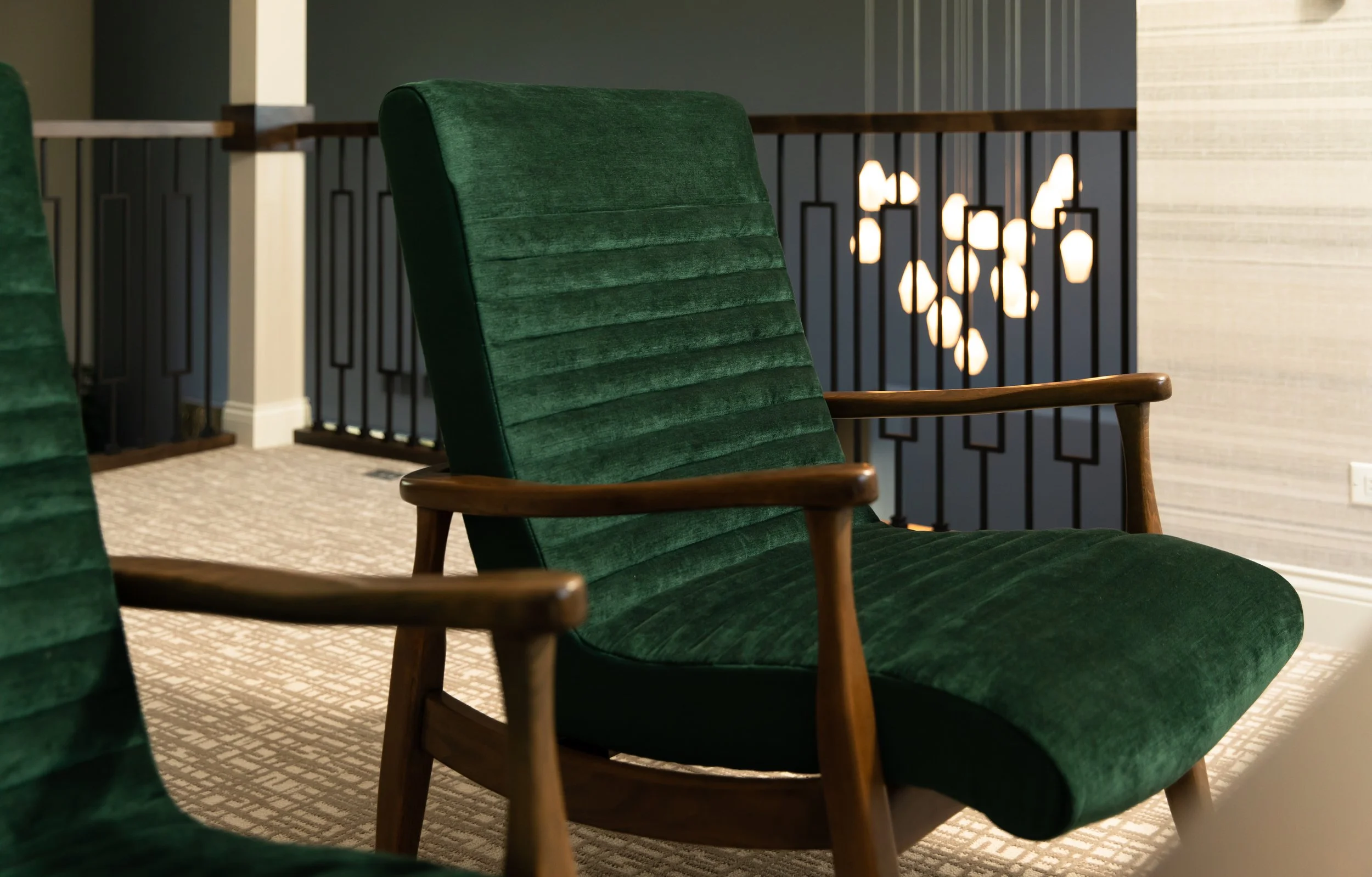
Deeper tones like this rich green introduce a sense of grounding and quiet confidence, anchoring the space while reinforcing a rich, deep presence. Paired with warm wood and soft neutrals, the palette feels both composed and inviting, supporting focus without feeling overly structured.
Use Color to Support Focus
Color plays a subtle but powerful role in how a space functions, shaping not only how it looks, but how you think and feel within it. Softer blues can create a sense of calm and ease, though in some cases may feel less structured over long periods. Warm neutrals and layered grays often support clarity and creative thinking, offering a balanced backdrop that doesn’t compete for attention. Deeper tones like navy, charcoal, or plum introduce a sense of grounding and quiet authority, anchoring the room and reinforcing presence.
When we begin designing, we often ask:
What colors are you naturally drawn to?
How do you want to feel when you sit down each day?
For some, that means a space that feels calm and steady. For others, it’s about energy, focus, or a sense of strength and composure. The palette should reflect that.
We also consider undertones carefully, warmer palettes can feel more inviting and approachable, while cooler tones bring a sense of focus and restraint. Subtle contrast and layered materials keep the space visually engaging without becoming distracting.
Ultimately, color should work in the background, supporting both performance and well-being, while still feeling deeply personal to the person using the space every day.
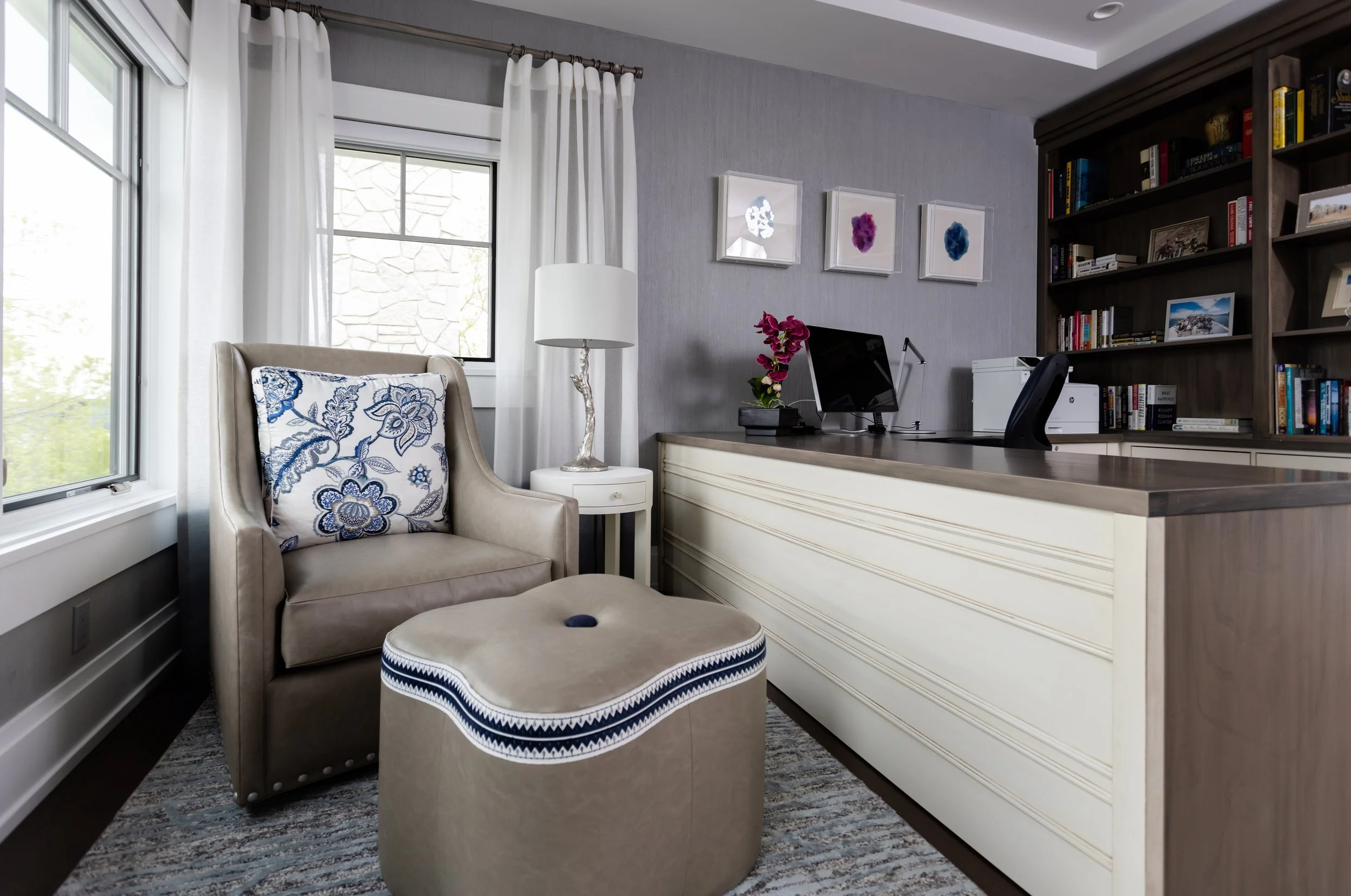
Create Space for a Different Kind of Work
Not all work happens at a desk and the most successful offices are designed to support not just productivity, but recovery. We think intentionally about creating space for micro-moments of reset throughout the day, whether that’s stepping away for a conversation, reviewing notes in a different posture, or simply taking a pause between meetings.
Incorporating a small seating area whether a pair of chairs or a more relaxed vignette, introduces that flexibility. It allows for more informal conversations while offering a natural shift in pace, helping the day feel less rigid and more fluid.
We also look beyond function to what surrounds these spaces. A view to the outdoors, softer lighting, or a quieter corner of the room can subtly support a sense of calm and clarity. These layers create an environment that not only supports focus, but also gives you space to reset so you can return to your work with more intention and energy.
Incorporate Art That Feels Personal
Art is often the most personal layer in the room. It can spark conversation, hold meaning, or offer a moment of inspiration in the middle of a full day. Whether abstract, sculptural, or photographic, it should reinforce the mood of the space while creating a point of connection for both you and your guests.
A Final Thought
The most successful home offices feel composed but personal. Every detail—from layout to lighting to materiality—works together to support not just productivity, but how you show up each day. It’s a balance of structure and softness, where function meets a sense of ease, and where the environment quietly reinforces focus, confidence, and well-being over time.
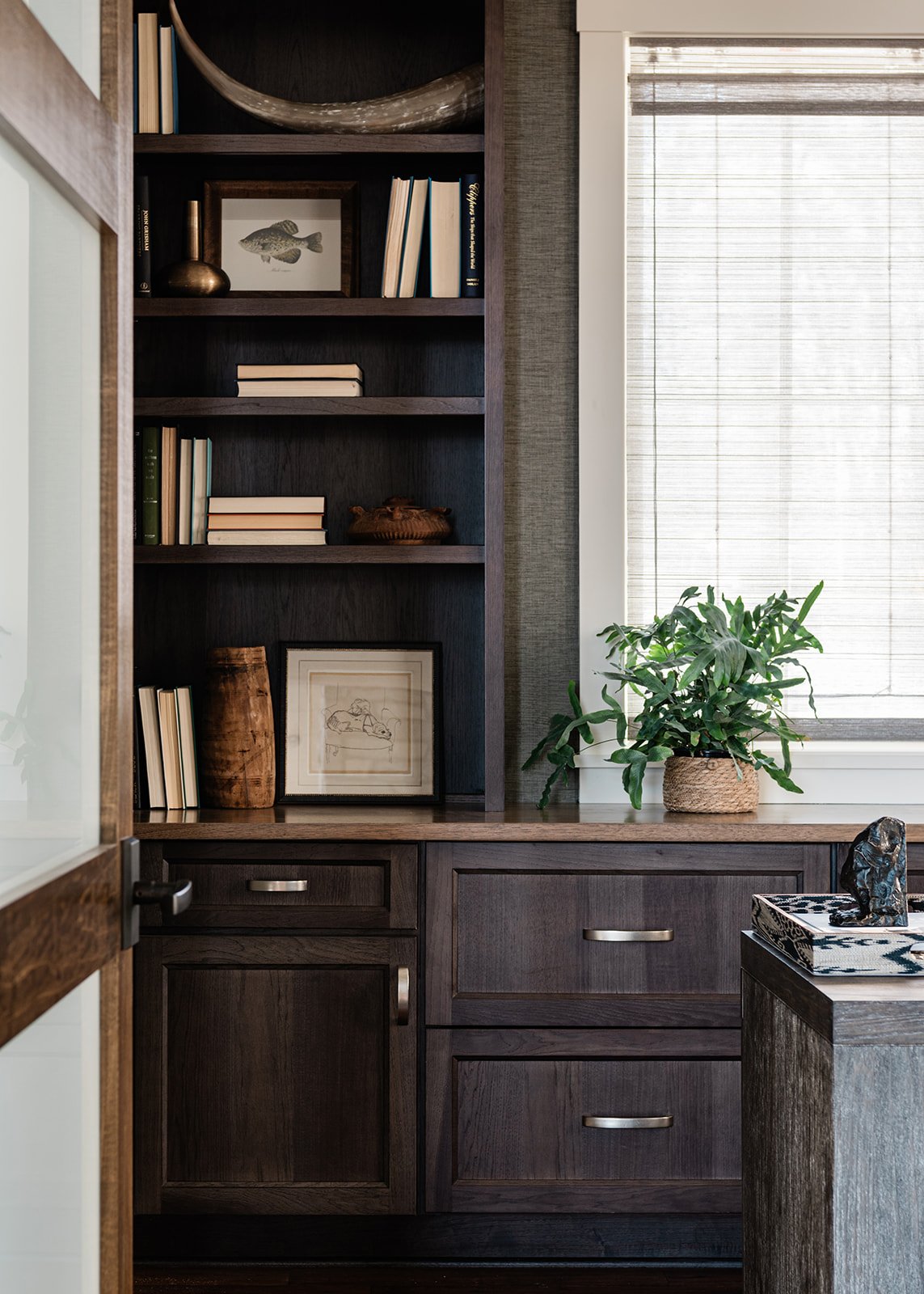
Rather than overfilling the space, we focused on restraint. A controlled palette, layered materials, and carefully chosen objects create a sense of quiet authority—where each piece has purpose and presence.
Let the Desk Reflect You
The desk anchors the room and quietly communicates both personality and position. We approach it as more than a functional surface, it’s a defining element that sets the tone for how the space is experienced day to day. In smaller offices, a streamlined writing desk can keep the footprint feeling open and intentional, while a more substantial piece introduces a sense of structure and privacy, particularly for client-facing work.
With much of today’s storage shifting digital, there’s greater flexibility to focus on materiality and detail. We often incorporate elements like leather insets, warm wood tones, or antique pieces that bring depth and character, creating a desk that feels chosen rather than purely utilitarian. The scale, finish, and silhouette all play a role in how the room feels, whether that’s lighter and more approachable or grounded and more defined.
Equally important are the layers that sit on top. Thoughtful accessories, curated desk pieces, and a meaningful photograph introduce a personal rhythm, small moments that make the space feel distinctly yours without adding visual noise. The result is a workspace that feels tailored, functional, and deeply connected to the person using it.