

Layering Neutrals: How We Create Depth Without Using Bold Color
Neutral interiors are often misunderstood.
Many people assume a neutral home means minimal color or restrained design. In reality, the most compelling neutral rooms are layered, dimensional, and quietly rich. When materials and tones are considered carefully, a neutral palette allows architecture, light, and texture to do the work.
In our projects, neutrals are rarely a single color. They are a composition of tones and materials that evolve throughout the day as light shifts across the room.
Some of the most layered homes we design are entirely neutral. The richness doesn’t come from color alone — it comes from how materials, light, and texture interact within the architecture.
Start With the Architectural Palette
When we begin designing a home, the neutral palette starts with the architecture.
Before furnishings are selected, we look at the materials that will shape the foundation of the space — stone surfaces, plaster walls, wood stains, and millwork finishes. These elements create the base palette that carries through multiple rooms and establishes a sense of continuity throughout the home.
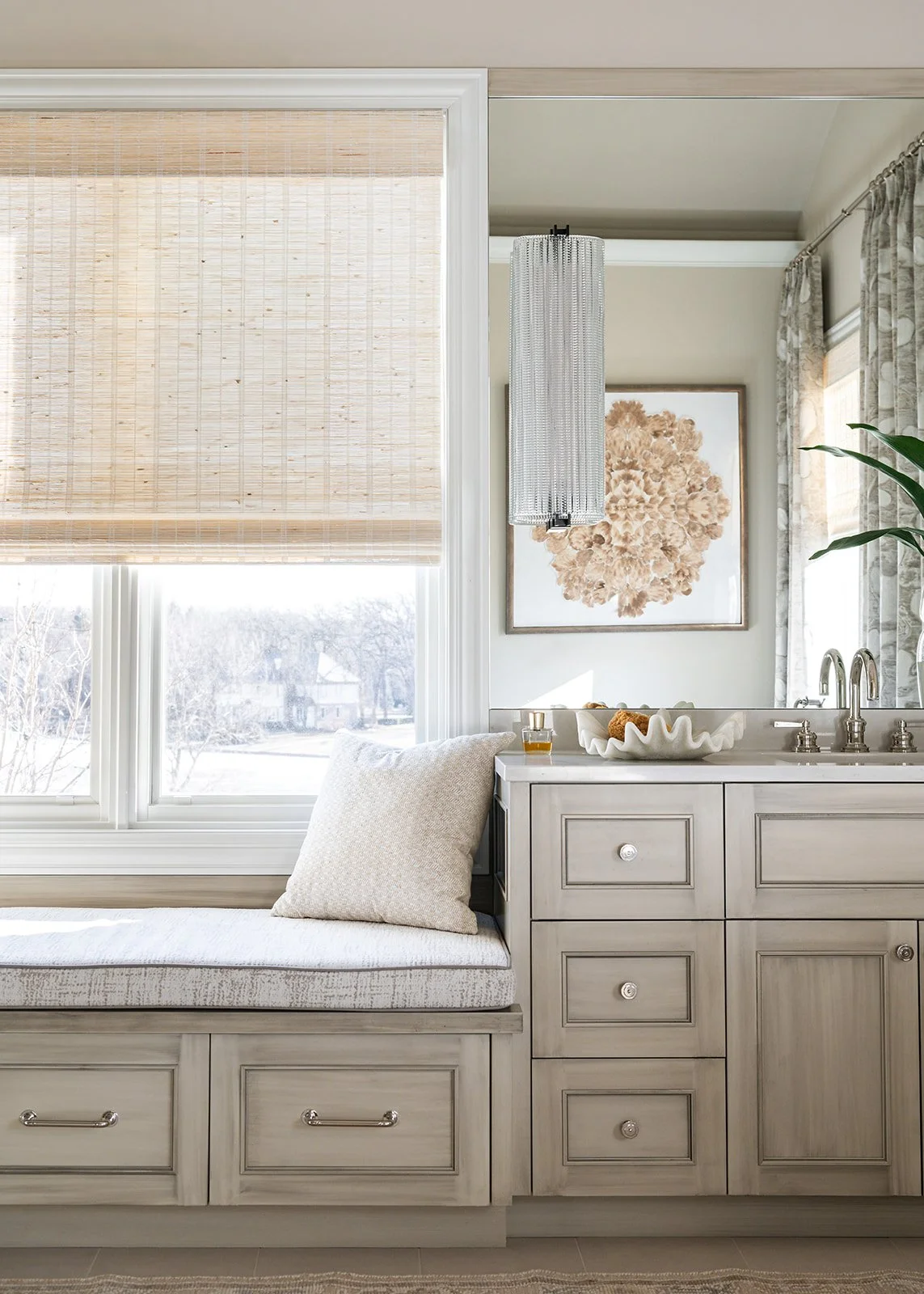
Soft limestone, honed marble, warm oak, and brushed brass introduce variation without sharp contrast. Instead of competing with one another, these materials create a quiet rhythm as you move from space to space.
A honed limestone floor, warm oak millwork, and brushed brass hardware may all sit within a similar tonal range, but each material reflects light differently, creating quiet dimension across the room.
When the architectural palette is considered early, the home feels cohesive rather than assembled.
Variation Creates Depth
In neutral interiors, depth comes from variation rather than contrast.
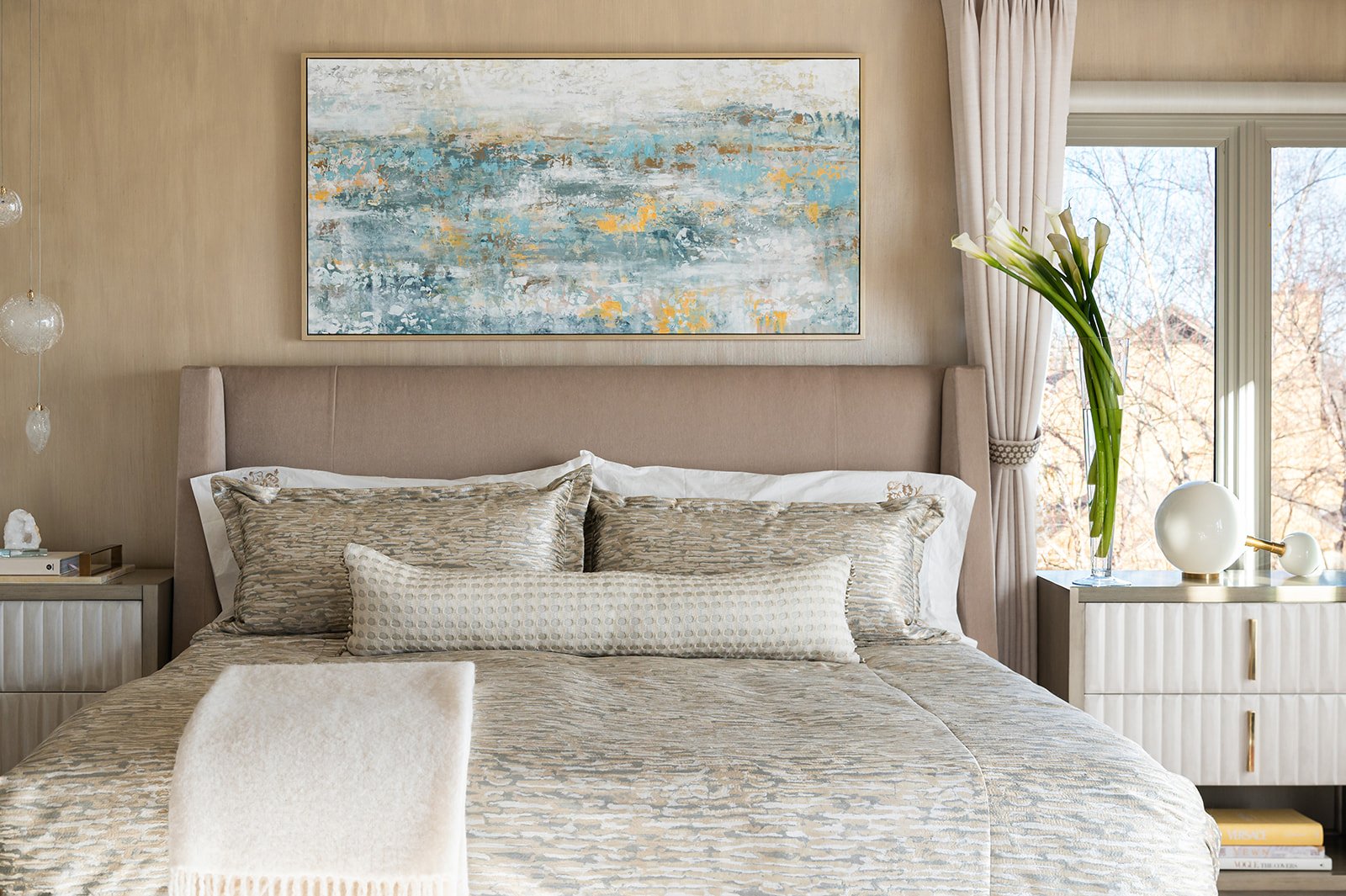
Rather than relying on dramatic color shifts, we layer tones that sit close together on the spectrum — chalky whites, weathered linen, clay, mushroom, and soft taupe. Each tone absorbs and reflects light slightly differently, creating dimension across surfaces.
Texture plays an equally important role. A boucle chair beside a smooth plaster wall, linen drapery near honed stone, or a wool rug beneath tailored upholstery introduces tactile contrast that keeps the room visually active.
These shifts are subtle, but they are what give a neutral room its depth.
Light Is the Final Layer
Natural light transforms neutral interiors throughout the day.
Morning light tends to reveal cooler undertones, while evening light deepens warmer hues. Because of this, we often review materials and paint colors within the home itself rather than relying on samples viewed elsewhere.
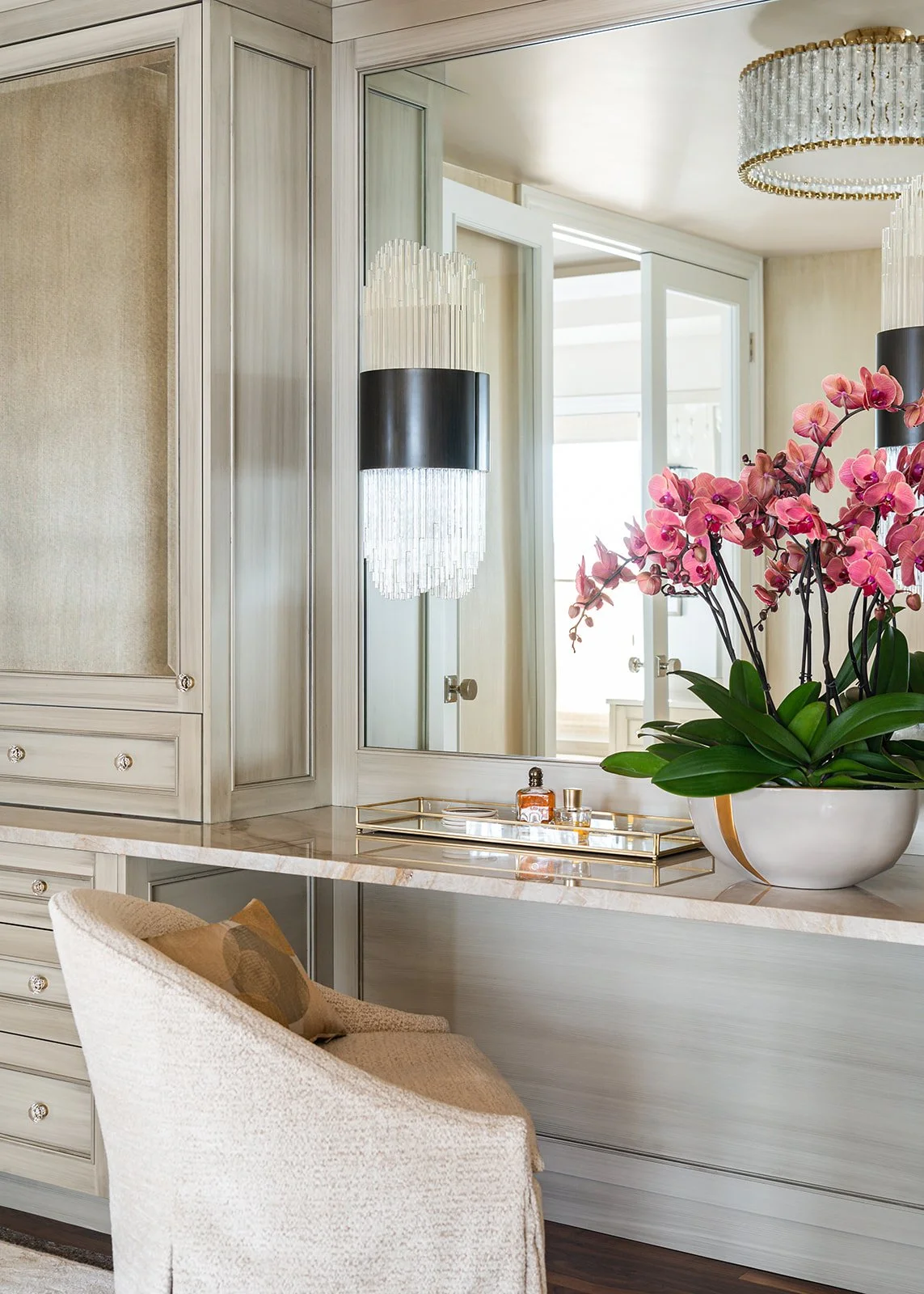
Lighting fixtures also play an important role. Sculptural pendants, layered sconces, and warm lighting temperatures soften surfaces and highlight the textures within a room.
When lighting is considered alongside color and material selections, the palette feels balanced and intentional rather than stark.

Why Clients Often Worry About Neutral Interiors
Many homeowners initially worry that a neutral palette will make their home feel unfinished or overly minimal.
In practice, the opposite tends to happen. When the palette is restrained, craftsmanship becomes more visible. Custom millwork, stone surfaces, sculptural lighting, and tailored upholstery stand out because the surrounding tones are calm rather than competing for attention.
For many of our whole-home projects, a layered neutral foundation allows art, furnishings, and personal collections to feel integrated rather than overpowering the space.
Allow Materials to Lead
One of the advantages of a neutral palette is that it allows materials to lead the design.
A slab of honed marble, a hand-applied plaster finish, or bespoke millwork detailing becomes more noticeable when the palette around it is restrained. Instead of relying on bold color for impact, the design highlights craftsmanship, texture, and proportion.
This approach creates interiors that feel composed and enduring rather than trend-driven.
The Result: Quiet Depth
When neutrals are layered thoughtfully, a room does not feel empty or minimal. It feels composed.
Stone, wood, textiles, and light work together to create subtle variation that reveals itself gradually. The room feels calm, grounded, and comfortable — the kind of space that continues to feel right long after the initial design decisions have been made.
When neutrals are layered with intention, the architecture, materials, and light provide the interest naturally.