

How Furniture, Layout, and Finishes Must Be Designed Together
The “Furniture Comes Later” Myth
It’s a really common way of thinking: You build or purchase a new home and think, “We’ll handle the big construction decisions first, floors, paint colors, lighting. And once all of that is finished, we’ll choose the furniture.
And honestly… that makes total sense. It’s how most people assume the process works.
But here’s the thing: furniture isn’t just the finishing touch. It’s one of the decisions that shapes everything else.
Furniture determines how a room functions day to day, how people move through it, and how the space feels at a real, human scale, not just on paper.
That’s why full-service interior design doesn’t treat furniture as an “after.” Instead, furniture, layout, and finishes are designed together from the beginning, as part of one connected plan.
Because when those pieces are developed at the same time, the end result feels intentional, cohesive, and effortless.
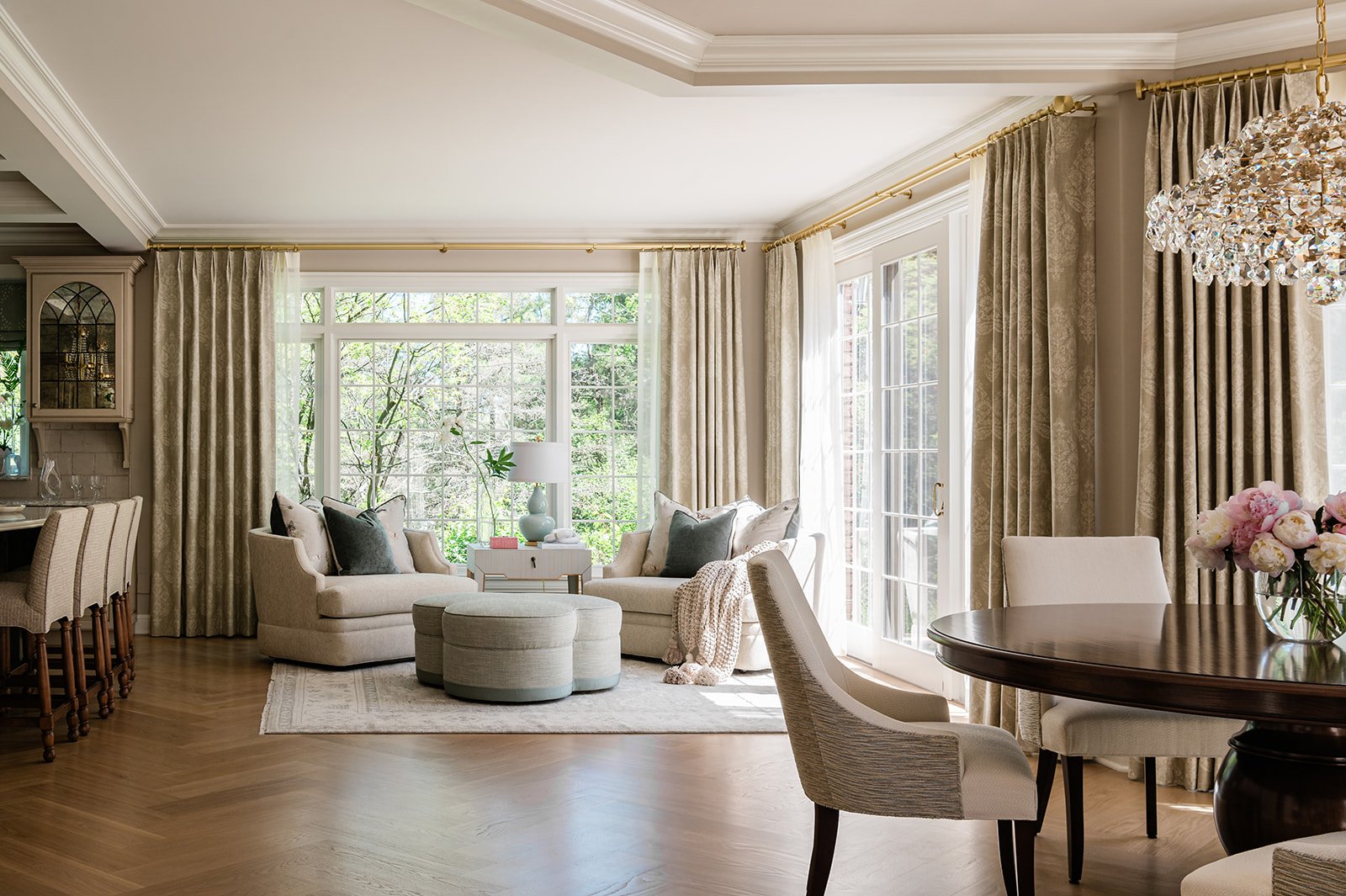
Furniture Is Spatial Planning
Before a room is styled, it must come together.
Furniture determines circulation paths, sightlines, and how people move through a space. The placement of a sofa can influence where lighting should fall. The scale of a dining table affects ceiling heights, fixture proportions, and clearances. Even the depth of a chair can change how a room feels and functions.
When furniture is considered early, it becomes a planning tool instead of a decorative afterthought. Layouts are shaped around how the space will actually be lived in, ensuring rooms feel balanced, intuitive, and comfortable once complete.
Why Finishes Can’t Be Chosen in Isolation
Finishes are often selected early in a project, sometimes before furniture layouts are finalized. While this can feel efficient, it frequently leads to mismatches in scale, tone, and overall cohesion.
Material choices such as flooring, wall finishes, stone, and metal, interact directly with furniture forms and upholstery. A finish that looks beautiful on its own may feel cold, flat, or overly dominant once furnishings are introduced.
Full-service interior design considers finishes in context. Materials are selected with an understanding of the furnishings they’ll support, the lighting they’ll reflect, and the way they’ll transition from room to room.
Designing in Layers, Not Steps
One of the biggest misconceptions about interior design is that it follows a linear path: layout first, finishes second, furniture last.
In practice, full-service designers work in layers.
Layouts, finishes, lighting, and furnishings are developed in conversation with one another. Decisions are revisited and refined as the design evolves, ensuring that no single element feels disconnected or overemphasized.
This layered approach allows the home to feel cohesive and complete—rather than assembled in stages.
What Happens When These Decisions Are Separated
When furniture, layout, and finishes are designed independently, problems often surface late in the process.
Rooms may feel visually heavy or under-scaled. Lighting may miss its mark. Finishes can feel overpowering or insufficient once the space is furnished. These issues aren’t always obvious on drawings or samples, but they’re felt immediately once the home is lived in.
Full-service design exists to prevent these disconnects by addressing the interior as a whole from the beginning.
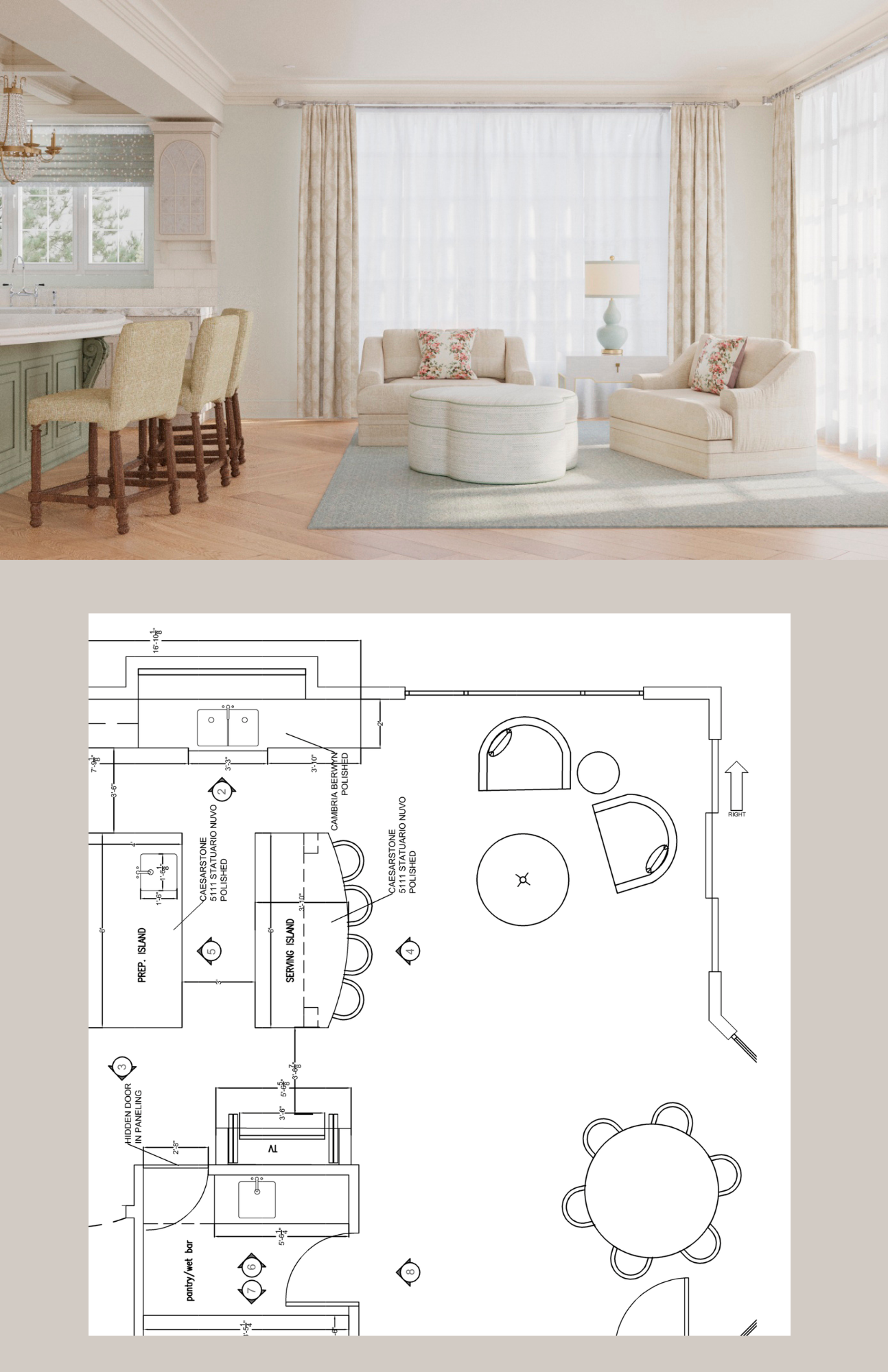
This image shows the floor plan of the kitchen and sitting area. Above it you will see a rendering of the same space, showing visually how the space plan will look and feel with furnishings in place.
Why This Matters in Whole-Home Design
In custom homes, renovations, and lake residences, the relationship between furniture, layout, and finishes is amplified.
These homes are designed to be lived in fully—often across seasons and by multiple people. Planning furnishings alongside architectural decisions allows for better flow, more intentional material transitions, and spaces that feel ready from day one.
Rather than adding furniture at the end, full-service interior design treats it as a foundational element—one that informs every layer of the home.
Designing the System
Furniture is not an add-on. It’s part of the structure of the interior.
When layout, finishes, and furnishings are designed together, the home functions better, feels more balanced, and stands the test of time. This integrated approach is what allows full-service interior design to deliver spaces that feel cohesive, intentional, and truly complete.
It’s not about more decisions—it’s about better ones, made in context.